











Fishing, Cycling, Skiing: When Polarization Is Truly Essential, and When It Isn’t
Introduction
“I’ll take the polarized one, it’s better anyway.”
You hear this sentence often in sports optics stores. And in many cases, it is true. But not always.
Polarization is a specific technology designed to solve a specific problem. And like every technology, it has situations where it excels and situations where it adds little, or can even create problems.
Polarized sunglasses for fishing: the ideal use case
There is no sport where polarization is more useful than fishing.
The reason is simple: anglers need to see into the water, and without polarization, they mostly see the reflection of the sky on the surface.
Sunlight reflected by water is strongly horizontally polarized — exactly the kind of light that a polarized lens blocks. The result is that the reflection almost completely disappears, making it possible to see depth, the bottom, and the fish.
It is not a small difference. It is the difference between seeing and not seeing the very purpose of your day out.
For fly fishing, river fishing, and shore fishing, a polarized lens is not an option: it is a tool.
Polarized lenses for skiing: when they work and when they don’t
On snow, polarization is useful in strong sunlight, when reflections from snow or ice create intense glare. In these conditions, a polarized lens significantly reduces visual discomfort and improves comfort.
However, in diffuse light conditions — whiteout, fog, overcast skies — polarization becomes less important. In those conditions, there are no strong reflections to eliminate. The main problem is low contrast, not glare.
A lens that optimizes contrast, such as Storm, or a high-VLT photochromic lens will be more useful.
The takeaway: for skiers who ride both in sunny conditions and in more difficult weather, a photochromic lens with integrated polarization, such as The One, can cover both scenarios.
Road cycling: why polarization makes a difference
Anyone who rides on wet asphalt, crosses bridges over rivers or lakes, or often cycles with low sun reflecting off the road knows the kind of glare that polarization eliminates.
On wet asphalt, reflections can be intense enough to dangerously reduce visibility.
The caveat: with polarized lenses, some GPS displays can become difficult to read. If you use a bike computer with an LCD screen, test the compatibility of the lens with your device first, or check that the bike computer uses a non-LCD display.
MTB: polarization or contrast? It depends on the trail
For MTB, the answer is less clear-cut.
If you mainly ride on open trails, in sunny conditions, or in environments with water — alpine lakes, streams, rivers — polarization makes sense.
If you mainly ride in the woods, in low light and diffuse light conditions, contrast is more important than glare reduction.
Many MTB riders find a contrast-optimized lens, such as Storm, more useful for winter rides and wooded areas, while they prefer a photochromic or polarized lens for summer rides on open terrain.
Running: when a polarized lens is not necessary
For running in parks or on the track, there are rarely the intense reflections on horizontal surfaces that make polarization useful.
A good photochromic lens — one that adapts to changing light between buildings, trees, and open sun — is often the most practical choice.
The exception: running on the beach or near water, where reflections can be significant.

How to choose the right lens: the practical rule
Polarization is worth it when the main problem is reflection from horizontal surfaces: water, icy snow, wet asphalt.
When the problem is changing light, low light, or reduced contrast, other technologies are more appropriate.
It is not a matter of “polarized is better” or “polarized is worse.” It is about matching the right technology to the problem you want to solve.
| Fishing | Always |
| Skiing in strong sunlight | Yes |
| Skiing in whiteout or fog | No, choose a high-contrast lens instead |
| Road cycling on wet asphalt | Yes |
| MTB in woods or low light | No, choose a photochromic lens or Storm instead |
| Running in parks or on track | Rarely necessary |
Recommended products
🎣Fishing
Piuma Fishing
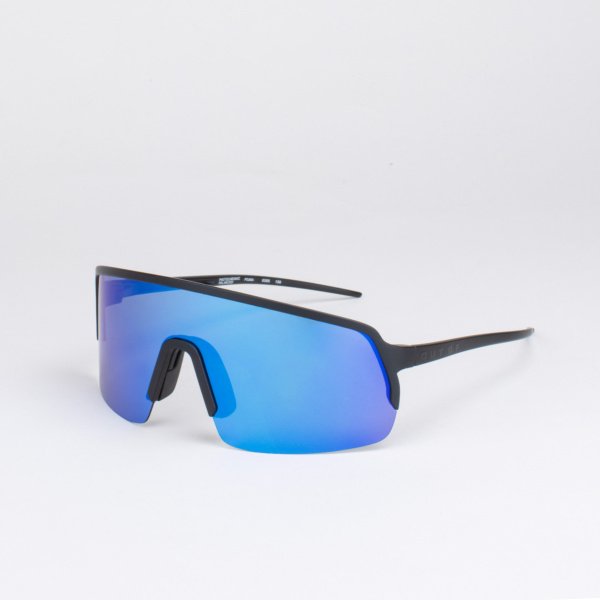
The lightest in the world in its category: 16.1 g. Grilamid + carbon fiber frame. The One photochromic and polarized lens. Made in Italy.
€189
Discover more >
Swordfish Fishing

Robust Grilamid frame, temples with extra grip for aquatic environments. The One photochromic and polarized lens. Made in Italy.
€149
Discover more >
Forge

Wraparound frame with +30% side coverage, hydrophobic lenses, silicone nose pad and temple tips. Made in Italy.
€199
Discover more >
⛷️Skiing and snowboarding
Void The One

Lightweight ski goggles with an incredible 215° field of view. The One photochromic and polarized lens, OTG-compatible frame. Made in Italy.
€189
Discover more >
Katana The One

Ski goggles with The One photochromic and polarized lens and a quick lens-change system in 6 seconds. Made in Italy.
€169
Discover more >
Shift The One

Compact ski goggles with The One photochromic and polarized lens and a quick lens-change system. Made in Italy.
€169
Discover more >
🚴Road cycling and MTB
Piuma

The lightest in the world in its category: 16.1 g. Grilamid + carbon fiber frame. The One photochromic and polarized lens. Made in Italy.
€189
Discover more >
Swordfish

Robust Grilamid frame, temples with extra grip for aquatic environments. The One photochromic and polarized lens. Made in Italy.
€149
Discover more >
Forge

Wraparound frame with +30% side coverage, hydrophobic lenses, silicone nose pad and temple tips. Made in Italy.
€199
Discover more >
